Oct 5, 2026 | Blog
For small and mid-sized organizations, the quick adoption of generative AI tools like Microsoft Copilot and consumer chat platforms offers remarkable productivity advantages. However, businesses run the risk of serious data leaks, intellectual property loss, and noncompliance when these capabilities are deployed without institutional safeguards. When employees don’t have access to authorized tools or defined boundaries regarding private company information, shadow AI flourishes. With an efficient AI governance strategy, SMBs can use Copilot and enterprise chat platforms in a safe manner. Your company can encourage secure innovation while upholding complete administrative control by implementing standardized tool selection, data classification tiers, stringent input constraints, automated retention policies, and role-specific access limits.
Oct 5, 2026 | Blog
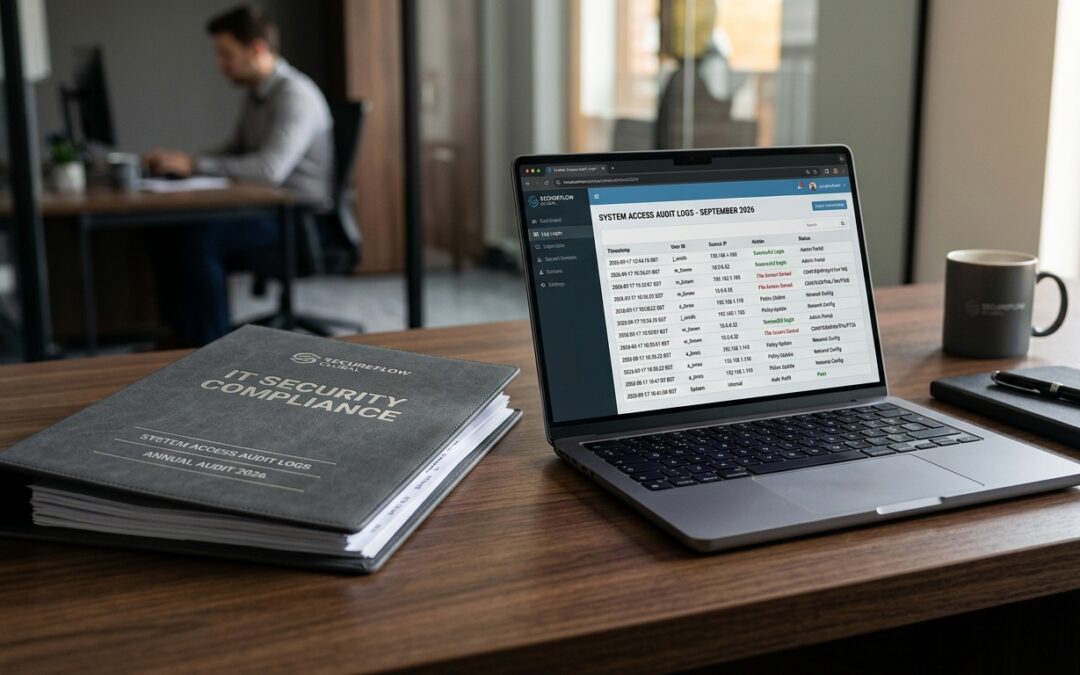
The process of navigating cyber insurance renewals and application questionnaires has evolved from a straightforward administrative task to a demanding technical audit. Simply selecting “yes” on underwriting forms without supporting technical evidence exposes small and medium-sized businesses (SMBs) to significant legal and financial risk. When real-world controls don’t meet questionnaire assurances during a post-breach inquiry, insurance companies frequently reject claims or cancel coverage. Technical measures, such as enforced multi-factor authentication, separated administrative privileges, automated endpoint detection, and defined log retention policies, must be directly mapped to unambiguous, tangible proof in order to achieve real cyber insurance readiness. SMB leadership can get comprehensive coverage, negotiate complex insurance questionnaires with complete confidence, and safeguard their company from catastrophic cyber risks by creating an orderly evidence binder and adhering to a planned pre-renewal calendar.

Oct 5, 2026 | Blog
It is 8:30 AM on a Tuesday, and your primary line-of-business application goes completely dark. Helpdesk tickets begin flooding in from every department. Your operations team cannot process customer invoices, your sales representatives lose visibility into active...

Oct 5, 2026 | Blog
One of the most important governance issues in Microsoft 365 is striking the correct balance between data security and collaboration speed. Employees will inevitably share sensitive files through unmanaged shadow IT tools and bypass corporate channels when external sharing measures are overly stringent. On the other hand, permissive settings allow unwanted external access to company intellectual property and consumer data. Organizations can build a proactive governance framework that reduces data loss without impeding daily productivity by implementing structured external sharing policies, such as precise link expiration settings, automated guest access reviews, sensitivity labels, and step-by-step approval workflows.
Oct 5, 2026 | Blog
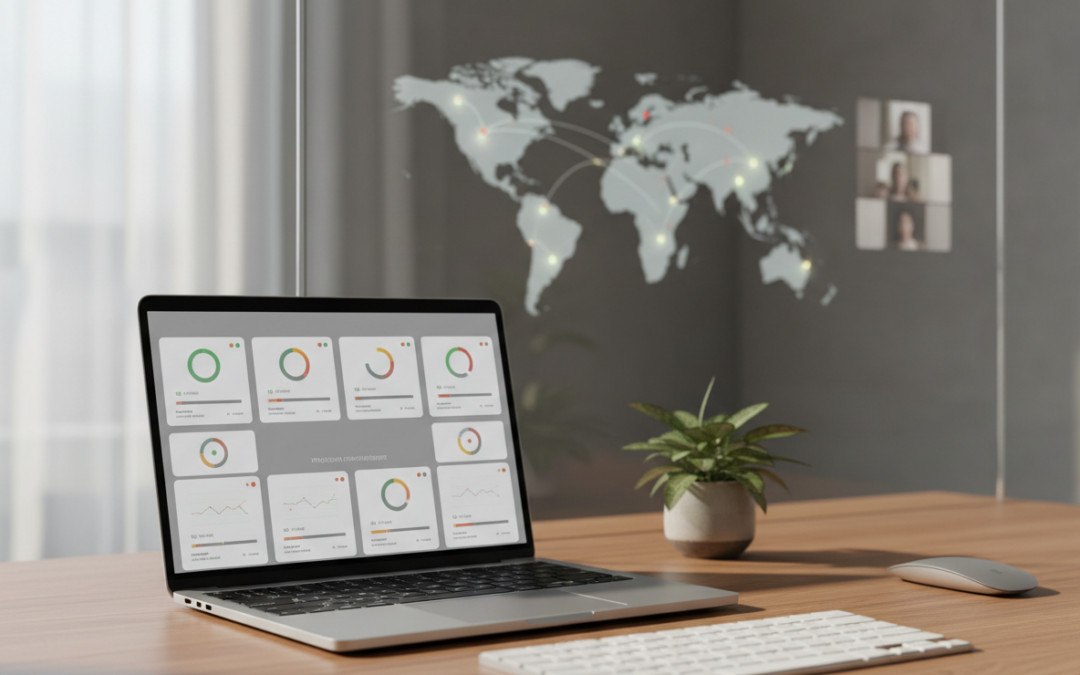
Businesses now need to rely on Endpoint Management and Mobile Device Management (MDM) products to secure corporate data across distributed settings because remote work has destroyed physical office perimeters. Employees often confuse modern device monitoring with invasive personal surveillance, creating significant operational friction. Staff members lose faith and compliance when they believe that IT is watching their webcams, recording their keystrokes, or reading private correspondence. Micromanagement is not necessary for true endpoint security. By setting clear monitoring boundaries, separating work equipment from personal devices, and communicating rules in plain, intelligible language, organizations may maintain total technological control while safeguarding employee privacy.

Oct 5, 2026 | Blog
Operational responsiveness has been revolutionized by remote work, but it has also revealed performance and security flaws at the periphery of the company network. Conventional cybersecurity systems concentrated on protecting a centralized office building, allowing remote workers to deal with unencrypted connections, consumer-grade Wi-Fi routers, and ambiguous technical support limits. To preserve continuity, data protection, and business productivity, organizations must establish enforceable standards for off-site workspaces. This guide delivers a practical blueprint for remote hardware baselines, encryption standards, guest network isolation, bandwidth requirements, and support boundaries—helping your business build an effective remote employee home network requirements policy for secure productivity.

Sep 2, 2026 | Blog
Day-one chaos during employee onboarding is rarely a talent or HR failure—it is almost always a broken IT workflow. When a new hire sits at a desk waiting for password resets, missing file permissions, or unconfigured hardware, productivity grinds to a halt while cybersecurity risks soar. Building a secure, streamlined IT onboarding checklist within Microsoft 365 transforms first-day friction into immediate business value. Using group-based access, automated device provisioning, baseline security policies, and targeted role-based permissions, small and medium-sized businesses are able to deliver an effortless, audit-ready onboarding experience from day one.

Sep 2, 2026 | Blog
Instead of tiresome summaries of closed support tickets, quarterly business reviews should be strategic engines that align technology with your company’s objectives. Learn how to spot fluffy presentations, what constitutes a truly valuable MSP QBR, and the precise strategic agenda required to turn your IT planning into steady operational progress.

Sep 2, 2026 | Blog
Most managed service providers guarantee lightning-fast response times, but unresolved tickets, frequent outages, and a lackluster IT strategy still plague business operations. Service Level Agreements that gage basic response speed don’t tell you how well a technician resolved the issue; they simply tell you how quickly they acknowledged your unhappiness. Learn about the extensive MSP service quality scorecard criteria that go beyond SLA response time and accurately forecast operational stability, real security posture, and strategy alignment for contemporary enterprises.

Sep 1, 2026 | Blog
When a mission-critical cloud application suffers a sudden outage, operational chaos often stems not from technical failure alone, but from a breakdown in ownership. Discover how setting up an application owner registry, defining clear triage roles between internal IT, operations, and your Managed Service Provider (MSP), and standardizing vendor escalation protocols can transform incident response from frantic finger-pointing into a controlled, structured resolution.

Sep 1, 2026 | Blog
You overpay on SaaS because SaaS is meant to spread, not because you are irresponsible. When a department alters a plan to unlock a feature or a team chooses a tool for a project, you suddenly have to deal with dozens of suppliers, unanticipated renewals, and the inevitable “who owns this?” discussions that follow the invoice. Cleaning is a continuous process. Inventory, use reviews, renewals, and safe offboarding are all part of operational control, which is a repeatable process.

Sep 1, 2026 | Blog
If you only replace laptops and phones when they break, you are not “saving money” but borrowing time at a high interest rate. The actual cost of a critical device failing in the middle of a project shows up as hurried last-minute purchases, lost billable hours, and security vulnerabilities. With a simple, warranty-anchored renewal schedule, replacing devices becomes a regular operating routine. This resource will help you in reducing end-of-life (EOL) risk, defining a spare device strategy that keeps your team productive, establish a lifecycle model by device type, and align finances so that refreshes don’t conflict with “more urgent” tasks.

Aug 3, 2026 | Blog
Most small businesses treat IT spend like an unwanted tax. Discover a practical IT budget framework based on risk, uptime, and business impact—plus a 12-month template to eliminate hidden tech costs.

Aug 3, 2026 | Blog
You can’t truly “leave” your MSP if they still have control over your domain registrar login, your Microsoft 365 global admin, or the financial connection that supports your licenses. The good news is that you can restore admin access without blowing up Teams, email, or your website provided you follow a calm, verified method. This post covers the safest ways to regain access, create break-glass accounts, rotate credentials, transfer licenses, and know when to get cyber insurance or legal counsel.
Aug 3, 2026 | Blog
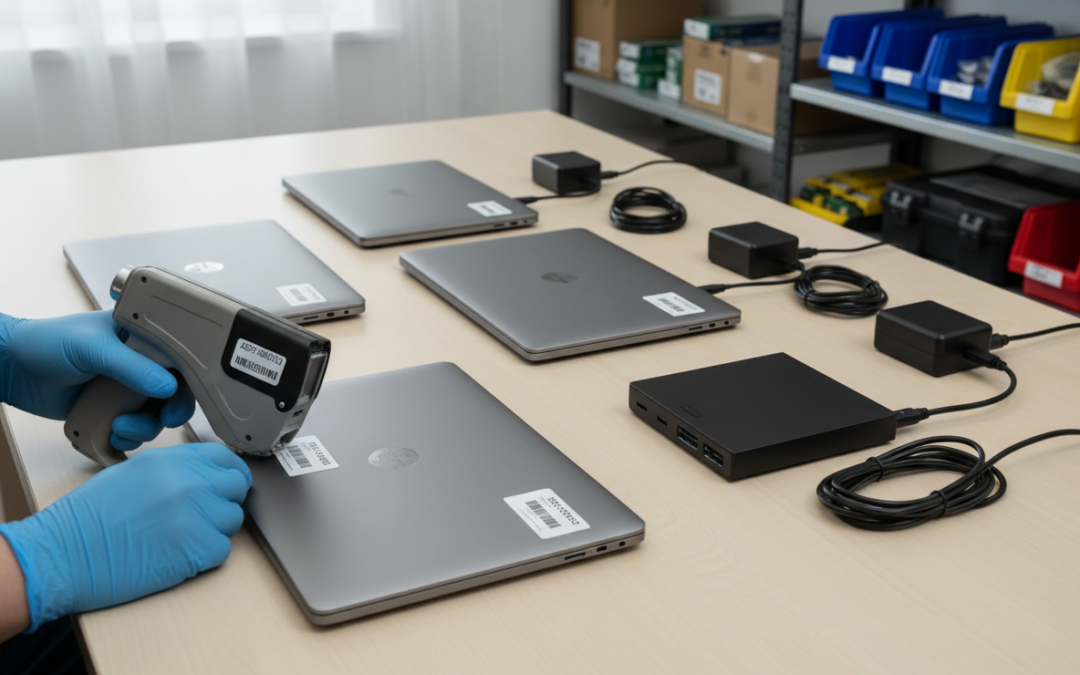
When you standardize models, warranties, imaging, encryption, and lifecycle rules, you stop burning hours on one-off fixes and start running a predictable, supportable fleet. This playbook gives you a business laptop procurement checklist for standardization and supportability—so every new device is secure, consistent, and ready to work on day one.

Aug 3, 2026 | Blog
It’s unclear escalation that causes after-hours situations to fail, not a lack of ability on your staff. A shared coverage model, distinct severity tiers, and a runbook-driven escalation ticket that provides the on-call engineer with precise instructions within the first ten minutes are the quickest routes to stability in a co-managed arrangement.

Jul 23, 2026 | Blog
Day-one chaos isn’t a people problem—it’s a workflow problem. If you want new hires productive (and secure) by lunch, you need an onboarding process that’s repeatable, auditable, and built around identity-first controls in Microsoft 365. This checklist shows you exactly how to do it—plus role-based variations for finance, sales, and executives, a ready-to-use SOP template, and a first-week follow-up that closes the gaps most teams miss.

Jul 22, 2026 | Blog
You don’t need “more IT.” You need clear ownership. In a co-managed model, the fastest way to reduce tickets, security gaps, and finger-pointing is a simple roles-and-responsibilities matrix that spells out who does what—internal IT, your MSP (LeafTech), and your key vendors. This guide gives you a practical RACI-style template, real-world examples (patching, EDR alerts, new users, SaaS outages, network changes, procurement), and a governance checklist you can use this week.

Jun 24, 2026 | Blog
You don’t build a disaster recovery plan because you’re pessimistic—you build one because you’re responsible. As an SMB, you’re often running lean: fewer people, fewer redundant systems, and less room for prolonged downtime. That’s exactly why disaster recovery IT and...

Jun 24, 2026 | Blog
You’re under pressure to move faster—automate support, analyze data, personalize marketing, and reduce costs. AI can help, but only if you treat ethics as part of the rollout, not a PR layer you add later. For SMBs, ethical AI is a practical business discipline: protect customer trust, reduce legal exposure, and make sure your tools don’t quietly create harm.

Jun 24, 2026 | Blog
You can buy better tools, add more monitoring, and lock down more settings—but if your people don’t know what “normal” looks like, you’ll still get burned. A cyber-aware culture turns everyday employees into a practical layer of defense: a human firewall that spots weird requests, pauses before clicking, and reports issues early.

Jun 23, 2026 | Blog
Instead of taking on your help desk, AI-driven IT support seeks to remove the friction that slows down your staff. This results in fewer recurrent tickets, faster resolutions, and a more modern support experience for SMBs—self-service that truly works, proactive fixes before customers complain, and technicians who devote more time to high-value issues. This will show you how to apply AI in the help desk, where it fits, and what to automate first, without sacrificing security, compliance, or human interaction.

May 12, 2026 | Blog
You don’t need a Fortune 500 budget to get serious about cloud security. What you need is a simple plan: know where your data lives, control who can touch it, encrypt it, back it up, and prove you can recover when something goes wrong. In a hybrid world—where some systems live on-prem and others live in the cloud—those basics matter even more.

Apr 21, 2026 | Blog
You don’t need to read another horrifying headline to know the threat landscape has intensified. Phishing that seems real, ransomware that spreads quickly, and attackers who log in with credentials they have stolen rather than “hacking in” are everyday...

Apr 21, 2026 | Blog
You’re watching a shift that looks a lot like the early days of cloud computing—except faster. Generative AI isn’t just a new tool; it’s a new operating layer for how work gets done. And if you run or support a small-to-mid-sized business, you don’t have much luxury...

Apr 21, 2026 | Blog
You’re living through a security inflection point. AI is making defenders faster, smarter, and more proactive. It’s also making attackers cheaper, quicker, and harder to spot. If you’re leading an SMB, you don’t have the luxury of treating this as “future tech.” AI is...

Apr 21, 2026 | Blog
If you run a small or mid-sized business, you have probably heard a lot about artificial intelligence over the last year. Some of it sounds exciting. Some of it sounds overhyped. Some of it sounds like it was written for giant enterprise companies with massive...

Apr 13, 2026 | Blog
If you run a small or midsize business, your IT environment cannot be an afterthought. It shapes how securely your team works, how quickly you can grow, and how well you recover when something goes wrong. A firm foundation is no longer about buying a server, setting...

Apr 13, 2026 | Blog
If you run a small business, you already know technology is no longer a side function. It shapes how your team communicates, how your customers experience your business, how securely your data is handled, and how efficiently your day-to-day operations flow. In 2026,...

Apr 6, 2026 | Blog
If you run a small or midsize business, you already know cybersecurity is no longer just a technical issue sitting quietly in the background. It is a business issue. It affects your operations, your reputation, your client trust, and your team’s ability to work...
 support@www.leaftechit.com
 720-772-3044